

Let’s break down how your skincare routine should shift with the start of spring.

How to Transition Your Skincare from Winter to Spring Without Stressing Your Skin
-
- Updated:
- 0 Comments
When spring arrives and the weather starts to warm up, it is tempting to change everything at once: put away rich creams, switch to lighter textures, add more glow, and swap out your actives. But your skin does not adjust as quickly as the season outside your window. In fact, a sudden jump from a winter routine to a “spring” one often leads not to freshness, but to sensitivity, breakouts, or that frustrating feeling that your skin has suddenly stopped cooperating.
The right approach in spring is not to overhaul your routine completely, but to gently adapt it based on what condition your skin is actually in right now.
What happens to your skin after winter
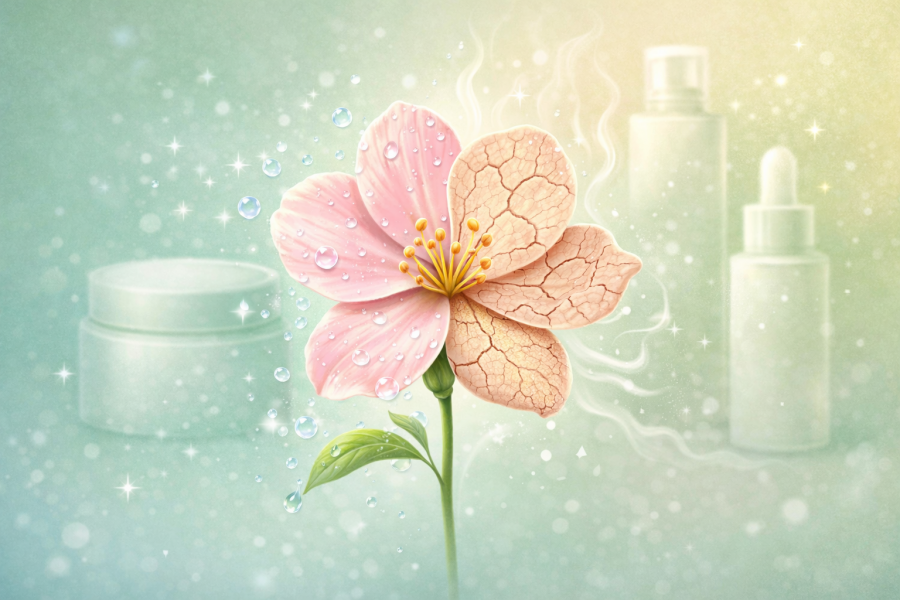
After the colder months, your skin may look more or less fine on the surface, but its barrier is often already tired. During winter, sebum production tends to decrease, transepidermal water loss increases, and dry indoor air, temperature swings, and heating all make skin less resilient and more prone to irritation.
After winter, skin most often:
- loses comfort quickly after cleansing
- reacts more strongly to new products
- becomes less tolerant of active ingredients
- stays dehydrated, even if it does not visibly look dry
That is why spring is not the time to “remove everything winter-related.” It is the time to gradually ease the load and see what your skin is ready to let go of, and what it still needs.
Why you should not change your routine too quickly
A sudden skincare switch almost never works in your skin’s favor. If you remove your rich cream, change your cleanser, and swap your actives all at once, your skin may respond with irritation, reactivity, or breakouts.
It is especially risky to:
- replace several core products at the same time
- suddenly switch from a cream to a gel
- start experimenting with actives
- introduce several new products at once
The main rule for March is very simple: one change at a time.
1. Focus on your skin’s condition, not the season
You do not need to stop using your richer winter cream just because the calendar says it is March. If your skin still feels tight, loses comfort quickly, or starts reacting to products that were previously fine, that means your barrier has not fully recovered yet.
In that case, it is better to:
- keep using your usual core cream for a little longer
- or switch to a slightly lighter texture with the same barrier-supporting ingredients
In spring, texture itself matters less than how your skin feels throughout the day.
2. Cleansing can become a little lighter, but not harsher
In winter, skin often does best with the gentlest possible cleansing. In spring, you can gradually move toward gel textures that do a better job removing sebum, SPF, and city grime. But that does not mean “stronger cleansing.”
A simple rule of thumb: if your skin feels tight, stings, or makes you want to apply cream immediately after washing, your cleanser is too aggressive.
In spring, the best cleansers are the ones that:
- cleanse well without drying out the skin
- do not compromise the barrier
- do not leave that squeaky-clean feeling
3. Actives: do not add more, adapt what you already use
Acids, retinoids, and vitamin C are most often introduced in autumn or winter. By spring, they may already be a familiar part of your routine, and that is completely fine. But in March, the goal is not to add even more. It is to assess how your skin is responding to those actives after winter.
After the cold season, the skin barrier is often more dehydrated and sensitive, so in spring it is usually better to:
- avoid increasing the frequency of your actives
- reduce them slightly, or even pause some of them if needed
- give your skin more recovery time
This is not about giving up actives. It is about adjusting them to your skin’s current condition.
4. Hydration always remains the foundation
Even when the weather gets warmer, the air can still be dry because of indoor heating, wind, and unpredictable spring weather. That is why hydration does not stop being important in spring. It may simply come in slightly lighter textures.
In a spring routine, these ingredients still work beautifully:
- Humectants: glycerin, hyaluronic acid, betaine
- Emollients: squalane, lipids, triglycerides
- Barrier-supporting ingredients: ceramides, cholesterol, fatty acids
Cutting back on hydration too abruptly is one of the most common reasons for springtime skin discomfort, even if your skin feels “not as dry as it was in winter.”
5. SPF comes back into your regular routine
As daylight hours get longer, SPF becomes even more important. Especially if your routine includes active ingredients or if your skin is prone to pigmentation.
So if you were less consistent with sun protection during winter, spring is the time to make SPF a regular habit again, because:
- UV exposure becomes more intense
- actives make skin more light-sensitive
- your post-winter barrier may still be less stable than usual
- pigmentation tends to come back faster in spring than people expect
The good news is that modern SPF formulas no longer feel like a separate heavy layer and are easy to work into your morning routine.
What a proper transition from winter to spring looks like
A proper seasonal transition is not a full skincare replacement in one week. It is a gradual adjustment of what is already working.
The healthiest version usually looks like this:
- your cream becomes a little lighter, if needed
- your cleanser becomes a bit more effective, but not harsher
- your actives do not get stronger
- SPF becomes consistent
- hydration remains a stable foundation
Signs you are doing it right
Do not focus on a dramatic “wow” effect after the first use. Focus on stability.
Good signs include:
- your skin does not feel tight after cleansing
- there is no stinging or increased reactivity
- new products do not create chaos in your routine
- your complexion stays even, without redness
- your skin feels comfortable throughout the day
When it is better to slow down
If, during the transition, you notice:
- redness
- stinging
- increased sensitivity
- new breakouts
- the feeling that your skin has suddenly become more “difficult”
that usually means too many changes happened too quickly. In that case, it is best to go back to a simple, stable routine and pause any new additions for a while.
So, what is the takeaway?
Transitioning from winter to spring is not about building a brand-new routine. It is about gently adapting your existing one to your skin’s new needs. Your skin does not need a revolution. It needs slightly lighter solutions, a little more attention, and a lot less rush.

Leave a Comment