

How to bring your skin back to comfort without overcomplicating your routine
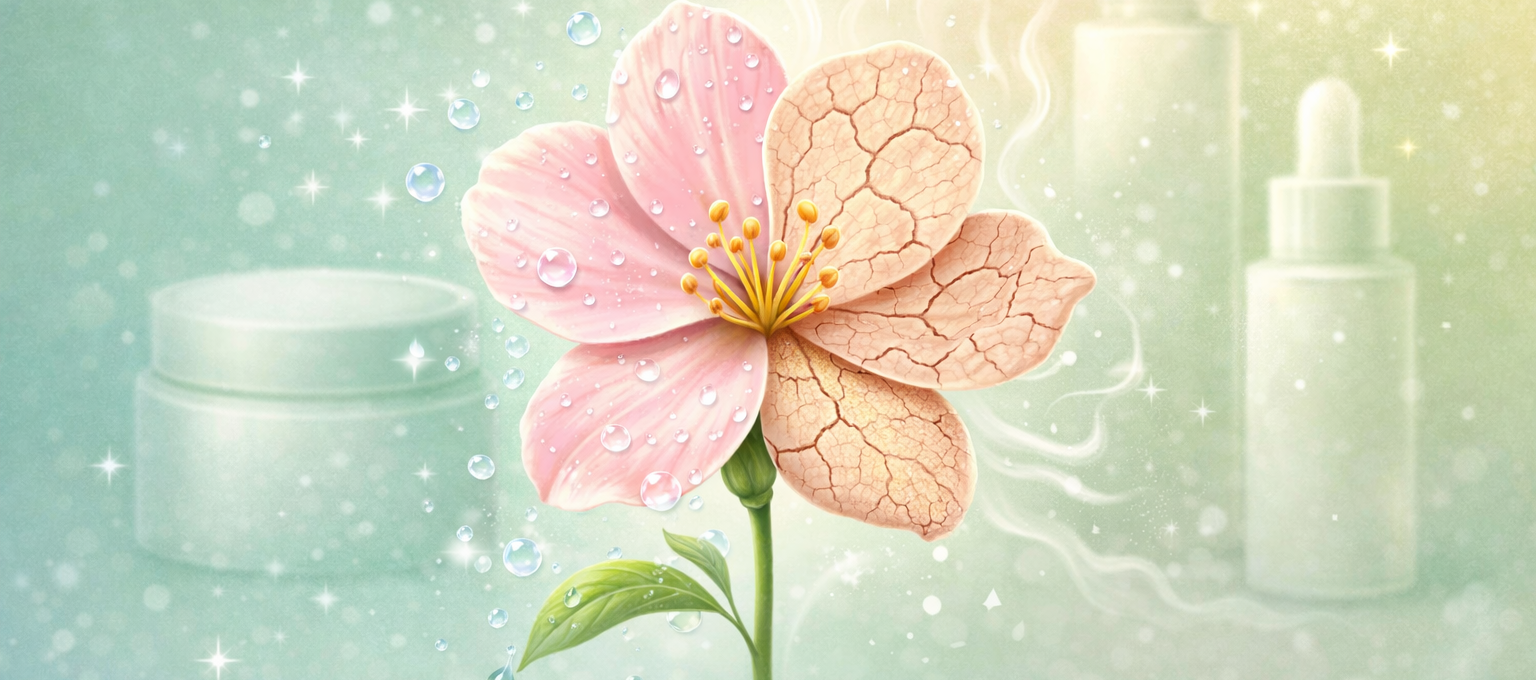
Spring Dehydration: Why Your Skin Still Feels Dry Even Though It’s Warmer Out
-
- Updated:
- 0 Comments
You’d think that once the weather starts warming up, your skin would finally breathe a little easier. Less frost, the heating is off, the sun is back, and surely this is the moment for fresh, happy, glowing skin.
But reality often has other plans.
The tightness lingers, your moisturizer seems to disappear the second you apply it, and your skin still looks tired, dull, and a little depleted. It can feel confusing. Winter is over, so why is your skin still behaving like it’s stuck in February?
The answer is simpler than it seems: early spring is not an instant reset. For skin, it is a transition period, and sometimes a surprisingly stressful one.
Why skin can still feel dry in spring
The first thing to remember is that warmer weather does not automatically mean your skin barrier has recovered. After winter, it is often still compromised. Cold air, wind, dry indoor heating, and constant temperature swings all put pressure on the skin and gradually increase transepidermal water loss.
And skin does not recover the moment the season changes.
Spring also comes with a very common skincare mistake: changing everything too quickly. The minute it feels a little warmer, we pack away richer creams, reach for lighter textures, add new actives, and rethink cleansing because it suddenly feels like winter skincare should be over.
But your skin may not be ready for that shift just yet. And instead of looking fresher, it can end up feeling tighter, drier, and more reactive, almost as if your routine has stopped working overnight.
Dry skin and dehydrated skin are not the same thing
This is where it gets important. When people say their skin is “dry,” they are often not talking about dry skin as a skin type. More often, they are describing dehydration, which means the skin is lacking water, not necessarily oil.
That means any skin type can become dehydrated:
- dry
- normal
- combination
- oily
This is exactly why even skin that usually leans oily can suddenly start feeling tight, flaky, or uncomfortable in spring.
Signs your skin may be dehydrated
Dehydration does not always show up as obvious dryness. Quite often, it feels more like your skin is simply off. It may still get shiny, but at the same time feel uncomfortable and unsettled.
Some of the most common signs include:
- tightness after cleansing
- feeling like moisturizer is never quite enough
- dull, tired-looking skin
- fine lines appearing more noticeable than usual
- increased sensitivity to products your skin normally tolerates well
- foundation or skin tint sitting unevenly, even over moisturizer
If several of these sound familiar, dehydration is probably part of the picture.
Why it happens so often this time of year
Usually, it is not just one thing. It is a few small factors overlapping at once.
Your skin barrier may still be recovering
After winter, skin is often still in repair mode. It loses moisture more easily and reacts more strongly to changes in routine.
You switched to lighter skincare too quickly
Spring makes us crave weightless, fresh-feeling textures. But if you remove too much barrier support all at once, your skin tends to let you know immediately.
Indoor air may still be dry
This one is easy to overlook. It may feel like spring outside, but at home and in the office the air can still be dry enough to leave skin feeling depleted.
You introduced too many actives
Spring often comes with the urge to brighten, smooth, and refresh everything. Acids, vitamin C, exfoliating toners, glow serums, the whole skincare parade. But if your barrier is not in great shape, even well-formulated products can leave your skin feeling drier rather than glowier.
What to do if your skin still feels dry in spring
The good news is that this usually does not call for an elaborate skincare rescue plan. More often than not, skin needs less stimulation and more consistency.
1. Do not rush to give up your richer cream
If your winter moisturizer was working well for you, there is no need to swap it for a gel cream just because it is April. If your skin still feels tight, it is probably still asking for barrier support.
A gentler transition usually works better:
- keep your usual cream for a little longer
- or switch to a slightly lighter texture that still includes ceramides, squalane, cholesterol, and fatty acids
2. Add hydration, not just nourishment
When skin is dehydrated, it needs more than lipids. It also needs ingredients that help draw in and hold onto water. Look for formulas with glycerin, hyaluronic acid, betaine, amino acids, and soothing hydrators like panthenol.
The sweet spot is a routine that includes both humectants and emollients: something to bring moisture in, and something to help keep it there.
3. Take a closer look at your cleanser
Spring is when cleansing can quietly become too aggressive. Maybe you want more freshness, maybe your skin seems slightly oilier, maybe you switched to something foaming and stronger without thinking much about it.
But if your skin feels tight after washing, that is usually a sign that your cleanser is either too harsh or being used too often.
4. Do not pile on more actives by default
If your skin is already dehydrated, adding more acids or stronger active formulas is rarely the answer. First, get your skin back to a place of comfort. Then decide whether it is ready for a more intensive routine.
Sometimes the most helpful thing is simply to:
- cut back on actives for a while
- avoid layering several strong products at once
- spend a few weeks focusing on barrier repair
5. SPF still matters, every day
If sunscreen fell out of your routine over winter, spring is the time to bring it back. Not just for the sake of preventing premature aging, but for your skin’s overall health, resilience, and comfort.
A simple routine for spring-dehydrated skin
This does not have to be complicated. In fact, simple is often exactly what skin needs.
A basic routine might look like this:
- gentle cleansing, with makeup removal in the evening
- a hydrating serum or essence
- a barrier-supporting cream at night
- SPF in the morning
- actives only if your skin is tolerating them well
That’s it. No ten-step routine, no dramatic overhaul, no skincare plot twists.
When to stop guessing and pay closer attention
If the dryness and tightness are not improving, and you are also noticing:
- persistent flaking
- burning
- redness
- breakouts
- soreness or increased sensitivity
then it may be more than simple seasonal dehydration. At that point, you could be dealing with a more significant barrier issue or an underlying skin condition. In that case, it is better to stop experimenting and speak to a professional.
The bottom line
Spring dehydration is incredibly common. And if your skin still feels dry even though the weather is warmer, that does not mean you are doing everything wrong. After winter, skin often needs time to recover. Not a complete routine reset, just a little patience, consistency, and support.
Sometimes the best thing you can do for your skin in spring is stop trying to force a glow and simply let it find its balance again. Because really, that is what good skincare is about: paying attention, slowing down, and giving your skin what it actually needs.


Leave a Comment